
Every entrepreneur starts with a brilliant idea. You know the one. The napkin sketch. The 2 AM eureka moment. The thing that made you quit your job and dive into the startup world.
Fast forward a year, and here you are, wondering why growth feels like pushing a boulder uphill in flip-flops.
“The idea is solid,” you tell yourself. “So why isn’t this working?”
Here’s the plot twist: Your idea was never the problem.
Read More: Why Personal Branding Is Your Career Superpower in 2026
The Uncomfortable Truth
Let me guess.
You’re working 80-hour weeks. Doing everything yourself because “nobody else gets it.” You’re the CEO, the sales team, customer support, and occasionally the janitor.
And somehow, despite all this hustle, your business is stuck in first gear.
The problem isn’t your work ethic. It’s that you’re trying to scale using the same approach that got you started.
Ideas don’t scale. People, communication, and systems do.
Not as flashy as “disrupt the industry,” but it’s the truth.
The Three Pillars You’re Probably Ignoring
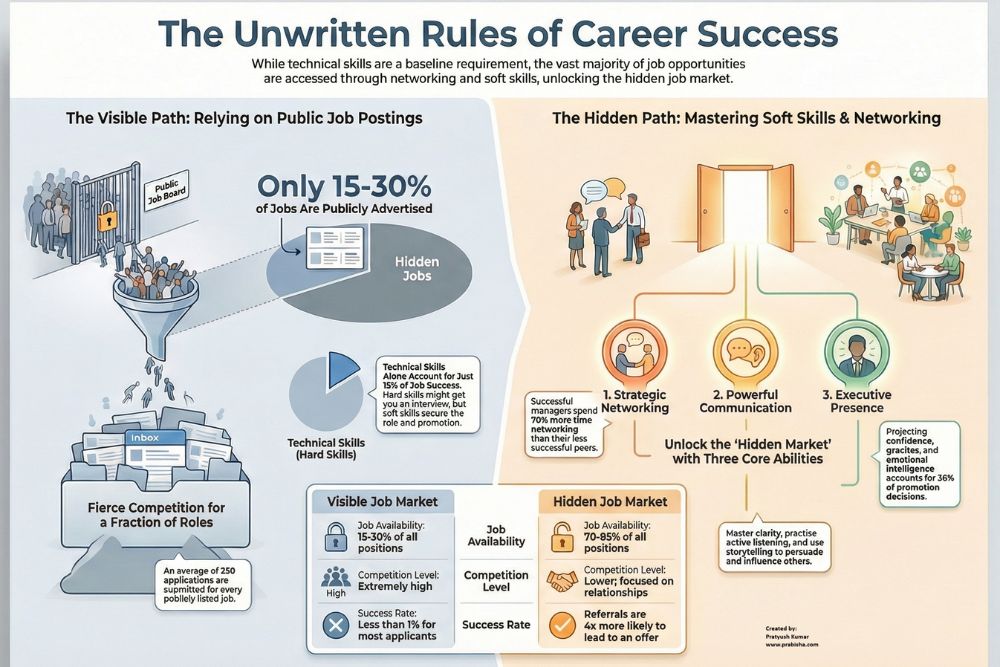
After working with countless founders who thought they just needed “one more feature,” I’ve noticed a pattern. Businesses that actually scale have three things in common. Miss even one, and you’re running on a treadmill. Lots of motion, zero progress.
Pillar 1: Communication (Or Why Everyone is Confused)
Fun exercise: Ask three people in your company what your vision is. Got three different answers? Congrats! You’ve discovered why scaling feels impossible.
As an entrepreneur, you’re the chief storyteller whether you like it or not. And your story probably sounds like a TED talk written by someone who’s had too much coffee.
You need clarity with:
- Your team: “Make it happen” isn’t a strategy. “Just figure it out” isn’t leadership. If they don’t understand the vision, they’re just showing up for a paycheck.
- Your customers: They don’t care about your twelve innovative features. They care about one thing: will this solve my problem? If you can’t explain it in ten seconds, they’re back to scrolling Instagram.
- Investors and partners: They’ve heard a thousand pitches. Yours needs to be crystal clear. “We’re like Uber but for…” stopped working in 2015.
Reality check: Your business grows at the speed at which others understand and believe in your vision.
When communication is muddy, everything falls apart. Teams drift. Customers bounce. Investors ghost you. Partnerships die in endless “alignment meetings.”
Pillar 2: Skills (The Stuff You’re Great At is Now Holding You Back)
Remember when hustle was your superpower? When working late nights and “figuring things out” solved everything?
Yeah, that doesn’t work anymore. Sorry.
The skills that made you good at starting:
- Moving fast without overthinking
- Doing everything yourself
- Making gut decisions
- Firefighting daily crises
The skills you need to scale:
- Strategic thinking beyond this quarter
- Building systems that work without you
- Making data-driven decisions
- Preventing fires instead of fighting them
See the problem? Everything that made you successful is now your bottleneck.
Scaling actually requires:
- Financial literacy: Knowing your bank balance isn’t enough. You need to understand unit economics and cash flow. “We’ll figure out monetization later” isn’t a business model.
- Systems thinking: If your business only works because you touch everything, you don’t have a business. You have an expensive hobby.
- Real delegation: Giving people authority, not just tasks. “Do this exactly as I would” isn’t delegation. It’s cloning.
And here’s what most founders hate:
- Emotional intelligence: Your mood sets the company mood. Your stress becomes everyone’s stress.
- Adaptability: The market you entered last year might not exist next year. Deal with it.
Hard truth: The skills that start a business rarely scale it.
Your business plateaus exactly where your personal development plateaus.
Pillar 3: Networking (Not the Schmoozing You Think)
Your networking strategy: collect LinkedIn connections, occasionally comment on posts, awkwardly exchange business cards you’ll never look at.
How’s that working?
Entrepreneurship gets sold as a lone wolf journey. It’s a great story. It’s also fiction.
Every “overnight success” has a network behind them. Advisors who opened doors. Mentors who prevented disasters. Partners who accelerated growth.
Strong networks:
- Speed up learning (why waste years on mistakes others already made?)
- Unlock funding (most comes from warm intros, not cold emails)
- Open new markets (one introduction beats a thousand cold calls)
- Attract talent (great people move through networks, not job boards)
- Provide sanity (fellow founders understand the 3 AM doubts)
The insight: Your next big opportunity is in someone else’s network, not your to-do list.
Real networking isn’t collecting contacts like Pokemon cards. It’s actually caring about others, giving value first, building relationships over years, and showing up consistently.
When It All Comes Together
Communication attracts belief. People seek you out. Customers become advocates. You stop chasing and start attracting.
Skills deliver results. Better decisions. Scalable systems. Predictable growth instead of chaos.
Networking multiplies reach. Doors open. Opportunities appear. Momentum builds itself.
Separately, each helps a little. Together, they create exponential growth.
The Reality Check
Ask yourself:
- Can your newest hire explain your vision?
- What skills that made you successful are now your weakness?
- When did you last give value to your network without asking for anything?
Your answers reveal your gaps. Your gaps reveal why you’re stuck.
The Actual Success Mantra
Success isn’t about working harder. You’re already working hard enough.
- It’s about communicating better so people believe before they see results.
- It’s about upgrading skills so you stop being your bottleneck.
- It’s about building relationships that compound over time.
Great ideas are everywhere. Coffee shops are full of “revolutionary” concepts.
Successful businesses are rare.
The difference isn’t the idea. It’s the entrepreneur who learned to communicate clearly, developed the skills to execute, and built the network to multiply impact.
Your business won’t outgrow you. It plateaus exactly where you plateau.
So the question isn’t whether you have a great idea. It’s whether you’re becoming the entrepreneur capable of scaling it.
Or keep doing what you’re doing and hope for different results. That always works.
The choice is yours.


